Discussions on topics difficult to navigate when pastoring a congregation
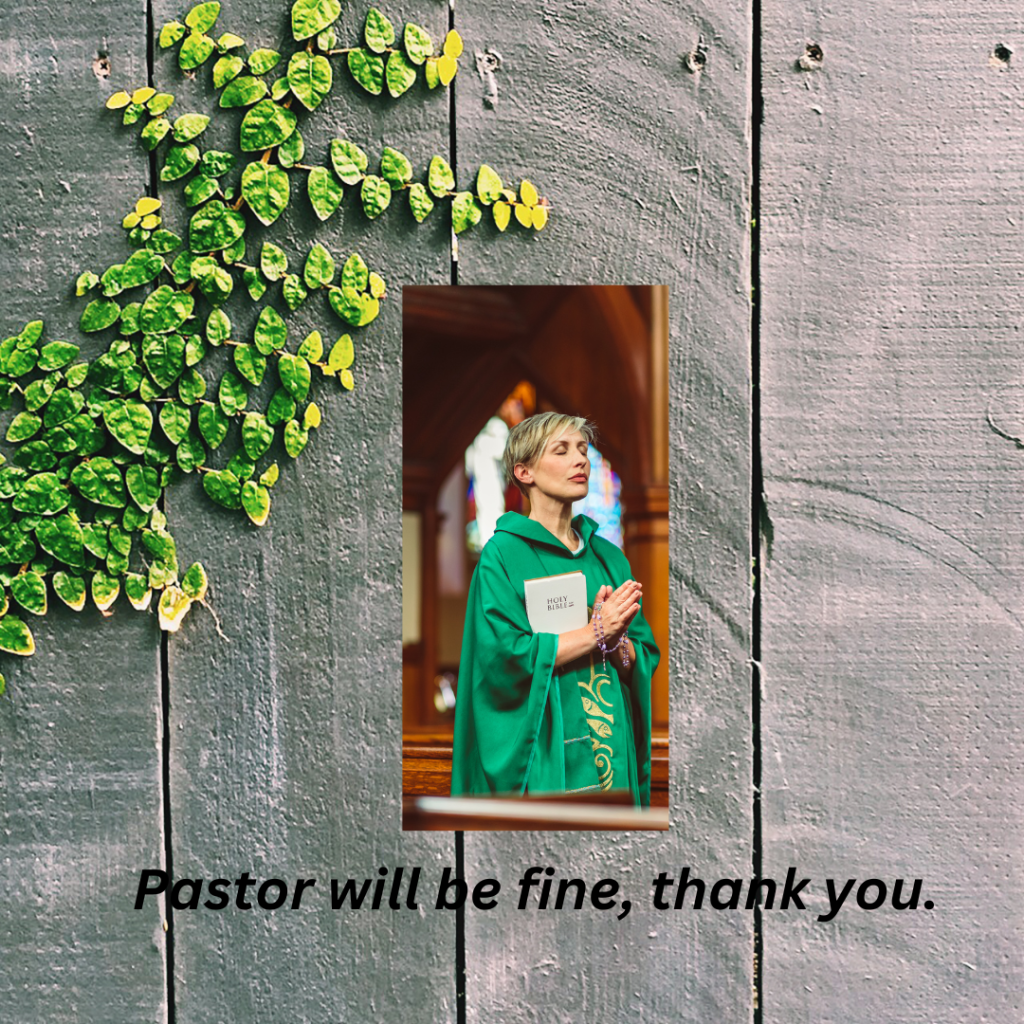
While interviewing I am asked a lot how I shall be addressed. This is a conundrum every time. When I choose to be Pastor First-Name I am considered friendly, open, and available but also younger, less experienced, and less professional. When I choose Pastor Last-Name I am considered too professional or too cold and there is no upside. When I say, “just Julie is fine” I get treated like I have no experience or education at all but makes the person in front of me feel comfortable.
You may be a congregation member who feels especially close to your pastor and that is wonderful! I promise they are honored to be that well loved by you. The thing is, I get imposter syndrome and using my title helps me remember the heavy and sacred role I have been called into and that I must wear it with respect for the people I lead. Using it with my last name helps me remember how much harm one can cause if we do not remember the power that comes with this title.
Once upon a time my husband’s commander called me ‘Kelly,’ right after he called my husband ‘Kelly.’ No rank, no title, no preface. Just our last name. This is normal in military circles, especially when one is higher in rank and addressing one lower in rank. And it is never acceptable to call a spouse by just their last name. An honorific is expected under military protocol. This is especially so when they are volunteers- ones who work for the unit for FREE.
When there is no paycheck, the least we can offer is respect. Calling me ‘Kelly’ was no mistake between my last and first names, which I am quite used to and rarely notice. This was a power play. He was addressing me as if I was a soldier but spouses don’t have rank. Thirty years later I clearly recall the sudden stillness in my gut and the realization that I could stand up for myself and cost my husband a promotion, or I could let it go and feel humiliated. I let it go, but I never forgot. Respect is powerful and more precious than money in this world.
There is a sense of intimacy taken when we choose to call someone by their first name or without their title at all. We *want* to show that we are close with them. Reverend Guy Irwin (former Bishop) notes that in Germany you can be very close and even quite affectionate with someone and still be expected to call them Herr or Frau(lein) (Mr. or Mrs/Miss)+ last name. In fact, often first names are reserved only for close family and does not indicate a lack of intimacy, but instead continued, deep, and personal respect. I *still* call my high school German teacher Frau (even Frauie to just her)and cannot imagine calling her Ursula! She was and remains my teacher for life and deserves that respect.
We are not talking about the military or the academic world here today. We are talking about the church where the premise still applies. After I was ordained my dear friend, Dr. Francisco Herrera stopped calling me by my first name and always uses “Pastor,” or “Pastora.” I tried to be ‘just me’ with him and said, “You can still call me by my first name.” His response still resonates:
“Many women and people of color do not have the money or connections to earn those degree titles and when they do they have often overcome stigma, generational poverty, and systemic racism as well. Earning these titles is a HUGE achievement for more than that individual. It represents an accomplishment of a whole family and community by breaking barriers and should continuously celebrated and respected by using those titles all the time.”
Then he gently and oh-so-respectfully reminded me it is an honor for him to use my title and will remain so for every woman, queer person, or person of color for his entire life.
“You are a woman in ministry. It is not an easy path and you will face disrespect. I will remember and show you the respect you have earned.”
In church this privilege is overlooked. Even when they are attempting humility, I wish more men acknowledged how hard some of us fight to get the title they so easily shun. One of my previous pastors (whom I love and respect deeply) said he didn’t like being called ‘pastor’ because he was in recovery and needed to stay humble and not on a pedestal. What he didn’t acknowledge is that he was on a pedestal with or without that title. The respect was automatically granted to him. But others have to earn the title again and again and again because of their gender, sexuality, or skin color.
Dr. Susan Harlan went viral when she penned this poem about this phenomena:

Omitting titles of marginalized people dismisses their journey and reinforces systemic racism and misogyny. It is easy to walk into a space and choose to sacrifice what is automatically given when we can pick it back up at any time and not be called ‘cold’, ‘inaccessible,’ ‘unfriendly,’ or even ‘unpastoral.’ People of color, queer folk, and women cannot do that. We are judged harshly every time.
My dear friend and colleague, the Reverend Stephanie Lape shared an unforgettable experience that names how powerful it is for us to wear our title and collar, which are the symbols of our sacred responsibility.
“When I attended the Parliament of the World’s Religions in Salt Lake City in 2015, I packed my suitcase with a couple of clergy shirts, but didn’t feel particularly like wearing them. At the Parliament, I was approached by women who were struggling for ordination rights who asked me if I would wear my collared shirts more often to normalize the look of women in ministry.
Only women who wear these shirts know what it feels like out in public, with the stares, questioning looks, disbelief or disapproval. Since those conversations, I wear my collar “out” more often and I feel the weight of it along with my responsibility to women who aren’t as privileged as I have been.”
What she taught me is that we have power in our presence and it is good and right for us to step into it. As Dr. Herrera said, it is our responsibility and honor to do so.
But this is a systemic issue about who we think is deserving of titled respect or not. But hear me out now…that ‘opinion’ is not ours to give. How one chooses to be addressed is theirs alone to declare and If one has earned a title too, we should honor that work. If we do hold them in affection and are invited to call them by their first name only, then and only then may we do so. And we should revert to that title when in mixed company again to show our continued respect.
In the end, there is no doubt when we use title+last name it commands respect. And when we choose to honor a fellow pastor, deacon, or degreed individual with their title and last name we honor the journey they have been on, the degree that they worked very hard for, and that they have earned that title and respect. In that moment we engage fully in the work to normalize degreed women, queer folk, and people of color in these roles too.
I invite you to practice using title+last name until asked to do otherwise, and even then, to carefully consider what is silently being said if you choose to do otherwise.

 Mistress of Divinity
Leave a comment